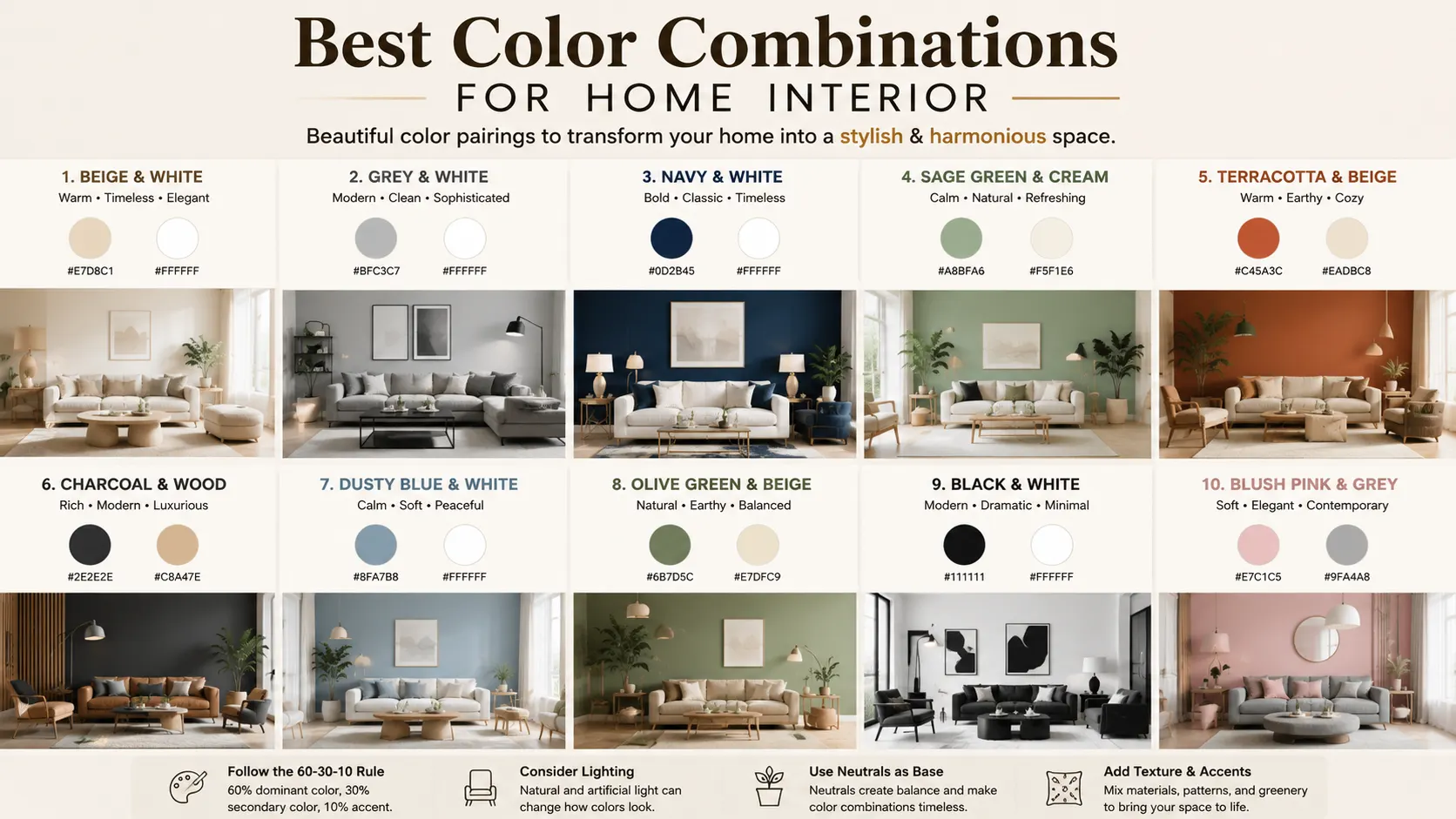
Choosing the right color combinations for home interior plays a crucial role in defining the beauty, comfort, and personality of your living space. Whether you live in a small apartment or a large villa, the right interior color palette can make your home look bigger, brighter, more luxurious, and emotionally balanced.
Why Color Combination Is Important for Home Interior
Color is more than just decoration. It affects:
- Human psychology and mood
- Room brightness and space perception
- Home value and aesthetic appeal
- Energy flow and comfort
A well-planned interior color combination:
- Makes small rooms look spacious
- Creates a calm and positive environment
- Enhances furniture and décor
- Improves natural and artificial lighting
Basic Color Theory for Interior Design
1. Warm Colors
- Examples: Red, Orange, Yellow
- Best for: Living rooms, dining areas
- Effect: Energetic, cozy, welcoming
2. Cool Colors
- Examples: Blue, Green, Lavender
- Best for: Bedrooms, study rooms
- Effect: Calm, relaxing, peaceful
3. Neutral Colors
- Examples: White, Beige, Grey, Cream
- Best for: Any room
- Effect: Balanced, elegant, timeless
The 60–30–10 Rule for Interior Color Combination
This rule is essential for perfect interior color balance:
- 60% – Main wall color
- 30% – Furniture & curtains
- 10% – Accent décor (cushions, artwork)
Using this rule prevents over-coloring and visual clutter.
Best Color Combinations for Living Room
Beige and Brown
- Classic and warm combination
- Perfect for family homes
- Works well with wooden furniture
Grey and Yellow
- Modern and stylish
- Yellow adds brightness
- Ideal for apartments
White and Blue
- Clean and refreshing
- Enhances natural light
- Best for small living rooms
Green and Gold
- Luxurious and elegant
- Creates a premium look
- Best for modern villas
Best Bedroom Color Combinations
Pastel Blue and White
- Improves sleep quality
- Calm and stress-free
Lavender and Grey
- Soft and romantic
- Ideal for master bedrooms
Beige and Peach
- Warm and cozy
- Great for guest bedrooms
Charcoal Grey and White
- Bold and modern
- Best for minimalist interiors
Best Kitchen Color Combinations
White and Green
- Fresh and hygienic
- Improves positivity
Yellow and White
- Bright and energetic
- Perfect for small kitchens
Grey and Wooden Finish
- Modern and elegant
- Ideal for open kitchens
Blue and White
- Clean and contemporary
- Easy-to-maintain look
Best Bathroom Color Combinations
White and Grey
- Spa-like appearance
- It makes bathroom look bigger
Blue and White
- Refreshing and cool
- Ideal for Indian climate
Beige and Cream
- Warm and hotel-style
- Luxurious feel
Black and White
- Modern and bold
- Use black as accent only
Kids' Room Color Combinations
- Blue and yellow—creativity and focus
- Pink and Grey – Balanced and calm
- Green and white—healthy and fresh
Tip: Avoid too many bright colors; keep one dominant shade.
Vastu-Friendly Interior Color Combinations
- North direction – Light blue, green
- East direction – White, pastel shades
- South direction – Beige, peach
- West direction – Grey, cream
These colors promote harmony and positive energy.
Latest Interior Color Trends
- Earthy tones (olive green, terracotta)
- Soft pastel shades
- Matte finish walls
- Neutral base with bold accents
- Two-tone wall designs
Common Interior Color Mistakes to Avoid
- Using too many dark colors
- Ignoring room lighting
- Choosing colors without samples
- Matching walls and furniture exactly
- Overusing bright shades
How to Choose the Best Color Combination
- Measure room size
- Observe sunlight direction
- Decide on a mood (calm, luxury, energetic)
- Choose neutral base color
- Add one secondary color
- Finish with accent decor
Frequently Asked Questions
Which color combination is best for small homes?
Light colors like white, beige, pastel blue, and light grey make rooms look bigger and brighter.
Can dark colors be used in interiors?
Yes, but only as accent walls or décor. Balance them with light shades and good lighting.
What is the safest color combination for any home?
White, beige, and wood finishes are timeless and work for all home styles.
How many colors should be used in one room?
Ideally 2–3 colors following the 60–30–10 rule.
Which colors are best for peaceful sleep?
Soft blues, pastel greens, lavender, and beige are ideal for bedrooms.
Should wall color match furniture?
No. Colors should complement each other, not match exactly.
Conclusion
Choosing the best color combinations for a home interior enhances beauty, comfort, and long-term satisfaction. A well-planned color palette makes your home look modern, spacious, and welcoming while reflecting your lifestyle.